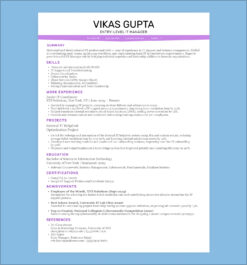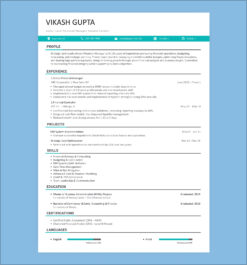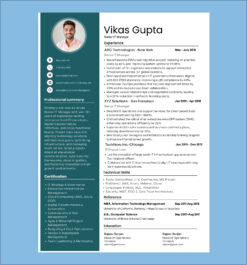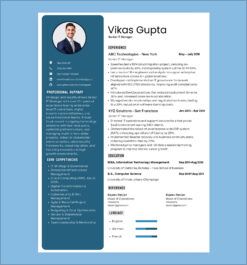
Resume Guide
Chronological vs Functional Resume: Key Differences, Examples & When to Use Each (2026)
May
A chronological resume and a functional resume are two widely used resume formats, but they organize information in very different ways.
A chronological resume highlights work history in reverse order, making it easier for recruiters to see job titles, employers, and career progression. A functional resume focuses on skills and competencies first, often minimizing detailed job history.
In this guide, you’ll clearly learn:
• The key differences between chronological and functional resumes
• When each resume format works best
• How recruiters and ATS systems interpret both formats in 2026
• Which format suits freshers, career changers, and experienced professionals
If you are deciding between a chronological and functional resume for job applications, exams, or interviews, this comparison will help you choose the right format with confidence.
Choosing between a Chronological vs Functional Resume comes down to one question: is your work history or your skill set your strongest asset? A chronological resume lists work experience in reverse order most recent position first making career progression immediately visible to recruiters and ATS systems. A functional resume organizes content by skill category rather than employment timeline, better suited for career changers, freshers, and candidates with employment gaps. For most job seekers with consistent, relevant work history, the chronological format is the safer and more widely accepted choice in 2026, preferred by the majority of recruiters and parsed more reliably by Applicant Tracking Systems including Workday, Greenhouse, and Taleo. If your work history is non-linear, limited, or unrelated to your target role, a functional or combination resume can shift attention to transferable skills, but requires careful structuring to avoid ATS compatibility issues. The full comparison below covers format differences, ATS impact, recruiter preference, and a clear decision framework for your specific career situation.
Chronological vs Functional vs Combination Resume: Quick Comparison (2026)
| Feature | Chronological Resume | Functional Resume | Combination Resume |
|---|---|---|---|
| Primary focus | Work history in reverse order | Skills and competencies | Skills first, then work history |
| Best for | Consistent experience, same field | Career changers, freshers, gaps | Career transitions, senior professionals |
| ATS compatibility | High — parsed accurately | Low — dates and titles buried | High — employment history clearly structured |
| Recruiter preference | Strongly preferred — most familiar | Used selectively — viewed with skepticism | Increasingly accepted — professional appearance |
| Shows career growth | Very clearly | Not clearly | Yes — chronological history is included |
| Highlights transferable skills | Secondary | Primary | Primary — dedicated skills section |
| Handles employment gaps | Gaps are visible | Gaps are less visible | Gaps somewhat visible |
| Structure | Time-based, recent to oldest | Skill-based, brief work history at end | Skills section first, then reverse chronological history |
| Suitable for freshers | Yes — education moves above work history | Yes — skills from projects and coursework | Yes — strong for freshers with mixed experience |
| Risk factor | Exposes gaps and job hopping | Can appear evasive if misused | Longer document — harder to keep to 1–2 pages |
| Typical length | 1–2 pages | 1–2 pages | 2 pages |
| Executive or senior roles | Preferred — standard expectation | Rarely used | Increasingly used for senior transitions |
Quick rule of thumb for 2026:
- Consistent experience, same field → Chronological
- Career change, fresher, or gap → Functional (or Combination)
- Senior professional changing direction, or strong skills to lead with → Combination
What Is a Chronological Resume?
A chronological resume organizes your work experience in reverse order, starting with your most recent job and working backward through your career history. Recruiters see your current or most recent role first, your previous roles after that, and typically no more than 10 years of history total.
This is the most widely used resume format globally and the default expectation of most hiring managers and Applicant Tracking Systems (ATS). When a recruiter opens your resume, they want to know immediately where you work now, what you did there, and how you progressed over time. A chronological resume answers all three questions in the first half of the page.
Chronological vs Reverse Chronological: Is There a Difference?
No. These two terms refer to the same format.
“Reverse chronological” is the technically accurate name, your experience is listed in reverse time order, most recent first. “Chronological resume” is the shorthand version most people use. When a recruiter, job posting, or career guide says “chronological resume,” they mean the reverse chronological format. You will see both terms used interchangeably across job sites, career resources, and resume tools, they mean the same thing.
Chronological Resume Layout: Section Order
A standard chronological resume follows this section order:
Contact Information Full name, phone number, email address, LinkedIn URL, and city or location. No full home address required in 2026.
Professional Summary 2–3 sentences summarizing your experience, key strengths, and career direction. Replaces the outdated objective statement.
Work Experience ← Primary section Each role listed from most recent to oldest. For every position, include:
- Job title
- Company name and location
- Employment dates (month and year)
- 3–5 bullet points covering responsibilities and measurable achievements
Education Degree, institution name, graduation year. For experienced professionals, education moves toward the bottom. For freshers and students, education can appear above work experience.
Skills A concise list of hard and soft skills relevant to the target role. Keep this section focused, avoid padding with obvious entries.
Optional Sections Certifications, awards, languages, volunteer work, or publications, include only when directly relevant to the role.
Pros and Cons of a Chronological Resume
Strengths
- Recruiters can scan it in under 10 seconds — they know exactly where to look
- ATS systems parse it accurately — job titles, dates, and employer names are clearly structured
- Shows career progression at a glance — promotions, increased responsibility, and consistent growth are immediately visible
- Expected format in most industries — banking, law, healthcare, corporate, and government roles all default to this format
Limitations
- Employment gaps are visible — a 6-month or 2-year break between roles is immediately apparent
- Frequent job changes stand out — if you have held 5 jobs in 3 years, this format highlights that pattern
- Transferable skills can get buried — if you are changing industries, your skills may matter more than your job titles, and this format does not lead with skills
Who Should Use a Chronological Resume?
Use a chronological resume if:
- You have worked consistently in the same field or a closely related one
- Your most recent role is your strongest — it directly supports the job you are applying for
- You have no major employment gaps or your gaps are under 3–4 months
- You are applying to large companies, corporate roles, or any position that uses ATS screening
- You are seeking a promotion or a lateral move within your current industry
If any of these conditions do not apply to your situation, a functional or combination resume may work better, covered in the next two sections.
What Is a Functional Resume?
A functional resume organizes content by skill category rather than employment timeline. Instead of leading with where you worked and when, it leads with what you can do, grouping your experience under skill headings like Project Management, Communication, or Technical Skills.
The work history section still exists in a functional resume, but it is brief. Job titles, company names, and dates are listed without detailed bullet points under each role. The skills section carries the weight of the document.
This format is useful when your abilities matter more than your job titles or when your work history is non-linear, limited, or from a different industry than the one you are targeting.
Functional Resume vs Skills-Based Resume: Same Format, Different Name
These two terms refer to the same resume format.
A skills-based resume is simply another name for a functional resume. Both organize content by competency rather than by chronological work history. You will see “skills-based resume” used more commonly in UK and Australian job markets, while “functional resume” is the standard term in the US and India. If a job posting or career guide refers to a skills-based resume format, it means a functional resume, same structure, different label.
Functional Resume Layout: Section Order
A standard functional resume follows this section order:
Contact Information Name, phone, email, LinkedIn, and city. Same as any resume format.
Professional Summary 2–3 sentences focused on your skills and what you bring to the role not your job history. This is where the tone shifts immediately from a chronological resume.
Core Skills / Key Competencies ← Primary section Your main skill categories, each with 2–4 bullet points showing how you applied that skill. Example:
Project Management
- Coordinated cross-functional teams of 8–12 members across 3 concurrent projects
- Managed timelines and budgets using Asana and Jira
Client Communication
- Handled escalation calls for enterprise accounts with 95% resolution rate
- Trained 6 junior staff on client onboarding procedures
Work History A short list — job title, company name, and dates only. No bullet points, no descriptions.
Education Degree, institution, graduation year.
Optional Sections Certifications, languages, awards — only when directly relevant.
Pros and Cons of a Functional Resume
Strengths
- Shifts focus to skills — useful when your job titles do not reflect your actual abilities
- De-emphasizes employment gaps — dates are not the primary visual element
- Effective for career changers — transferable skills lead the document instead of unrelated job history
- Works well for freshers — lets you highlight skills gained through education, projects, and internships when formal work experience is limited
Limitations
- ATS compatibility is weaker — automated systems are built to extract job titles, employer names, and dates. When these are buried or missing, ATS parsing fails and your resume may be scored lower or rejected before a human sees it
- Recruiters are skeptical — many hiring managers associate a functional resume with a candidate who is hiding something. This perception exists across most industries
- No career narrative — without a clear timeline, it is harder for a recruiter to understand how your experience developed
- Not suitable for senior roles — executive and leadership positions almost always expect a chronological or combination format
Who Should Use a Functional Resume?
A functional resume works in specific situations, it is not a general-purpose format.
Use a functional resume if:
- You are changing careers and your previous job titles are unrelated to the role you are targeting
- You have an employment gap of 1 year or more that you cannot easily explain in a chronological format
- You are a fresher or recent graduate with limited formal work experience
- You are returning to work after an extended break — parental leave, caregiving, illness, or further education
- You are applying for a role where skills and certifications matter more than employer names, certain freelance, creative, or technical roles
Avoid a functional resume if you are applying to large corporations, roles in banking or finance, government positions, or any role that uses ATS-heavy screening. In these cases, a combination resume gives you skill emphasis with fewer ATS risks.
When to Use a Chronological Resume
A chronological resume is the right choice when your work history is your strongest asset, when your job titles, employers, and career progression directly support the role you are applying for.
Use a chronological resume if:
- You have worked consistently in the same field or industry for 2 or more years
- Your most recent position is directly relevant to the job you are targeting
- You have no employment gaps, or any gaps are short and easily explained
- You are applying to corporate roles, large companies, or any position using ATS screening
- You are seeking a promotion, a lateral move, or a step up within your current industry
- You are applying to regulated industries — banking, law, healthcare, government — where employment history verification matters
Real-World Scenarios — Chronological Resume
Scenario 1 — Marketing manager with 6 years of experience Priya has worked in digital marketing for 6 years, moving from executive to senior manager across two companies. She is applying for a marketing head role. A chronological resume immediately shows her progression, her employer names, and her increasing responsibility, everything the hiring manager needs to make a shortlisting decision in under 10 seconds.
Scenario 2 — Software engineer switching companies Arjun has 4 years of consistent software development experience at two mid-sized tech companies. He is applying to a product company. His job titles and project scope are directly relevant. A chronological resume puts his most recent role — and most impressive work — front and center.
Scenario 3 — Finance professional with stable career Ravi has spent 8 years in banking, moving from analyst to assistant manager at the same institution. His employer name carries weight in the industry. A chronological format lets that employer name and career progression do the work for him.
When to Use a Functional Resume
A functional resume is the right choice when your skills are more relevant than your job history or when your work history has gaps, inconsistencies, or is from a different field entirely.
Use a functional resume if:
- You are changing careers and your previous job titles are unrelated to your target role
- You have an employment gap of 1 year or more
- You are a fresher or recent graduate with limited formal work experience
- You are returning to work after an extended break — parental leave, caregiving, or further education
- Your most relevant experience came from freelance work, projects, or volunteering rather than formal employment
Avoid a functional resume for corporate roles, large company applications, and any role with ATS-heavy screening. The combination format is a safer alternative in most of these cases.
Freshers and Students
If you are a fresh graduate or student with little to no formal work experience, a functional resume lets you lead with what you can do rather than where you have worked.
Group your skills under clear headings, Technical Skills, Research, Communication, Leadership and support each with examples from coursework, college projects, internships, or extracurricular activities. If you are still in school, a high school student resume follows the same skills-first approach with education at the top.
One important note: many Indian companies and campus recruiters still expect a chronological format even for freshers. In that case, use a modified chronological resume, education first, followed by internships or projects in reverse order, then skills. Check the job posting or company expectations before deciding.
Career Changers
If you are moving from one industry to a completely different one, your job titles from your previous field may work against you in a chronological format. A recruiter in a new industry scanning your resume will see unfamiliar company names and unrelated roles before they see what you can actually do.
A functional resume puts your transferable skills front and center project management, team leadership, client communication, data analysis, regardless of which industry you developed them in. Your work history is still listed, but it takes a secondary position.
For most career changers, the combination resume is an even better option, it leads with skills but keeps your employment history intact, which avoids the ATS and recruiter skepticism that a purely functional resume can trigger.
Candidates with Employment Gaps
A functional resume reduces the visual prominence of employment gaps because dates are not the primary structural element. If you have a 2-year gap due to personal reasons, caregiving, illness, or relocation, a functional format keeps the recruiter’s attention on your skills rather than your timeline.
However, a functional resume does not hide a gap from a thorough recruiter, most will ask about it anyway during screening. The format simply removes the gap as the first thing they see. Pairing a functional or combination resume with a brief, honest explanation in your cover letter is more effective than relying on the format alone.
Real-World Scenarios — Functional Resume
Scenario 1 — Teacher moving into corporate training Neha has 7 years of teaching experience and wants to move into corporate L&D. Her job title — “Secondary School Teacher” — does not signal corporate relevance to a recruiter scanning in 3 seconds. A functional resume leads with Curriculum Design, Facilitation, and Stakeholder Communication — skills directly relevant to a training role — before listing her teaching history.
Scenario 2 — Professional returning after a 2-year career break Meera took 2 years off for caregiving. She has strong project management and operations experience from before the gap. A functional resume leads with those competencies, keeping the gap in the background rather than the foreground.
Scenario 3 — Fresher with no formal work experience Rahul just graduated with a computer science degree. He has no full-time job history but has built 3 projects, completed 2 online certifications, and contributed to an open-source repository. A functional format — or a modified chronological with education first — lets his technical skills and projects lead rather than an empty work history section.
What Is a Combination Resume Format?
A combination resume merges the structure of both chronological and functional formats. It opens with a dedicated skills or competencies section similar to a functional resume and then follows with a complete reverse chronological work history. You get the skill emphasis of a functional resume with the career credibility and ATS compatibility of a chronological one.
This format has become increasingly common among experienced professionals, career changers, and senior candidates who have both strong transferable skills and a solid employment record worth showing.
Combination Resume vs Hybrid Resume: Same Format
These two terms are interchangeable.
A hybrid resume and a combination resume refer to the same structure skills section first, followed by reverse chronological work history. “Combination resume” is the more widely used term in the US and India. “Hybrid resume” appears more commonly in UK and Australian career resources. If a job posting, recruiter, or career guide refers to a hybrid resume format, they mean a combination resume, same layout, different label.
Combination Resume Layout: Section Order
A standard combination resume follows this section order:
Contact Information Name, phone, email, LinkedIn, and city. Same as all resume formats.
Professional Summary 2–3 sentences covering your experience level, key strengths, and career direction. In a combination resume, this summary should bridge your skills section and your work history connecting what you can do with where you have done it.
Core Competencies / Key Skills ← Primary section A structured list of your most relevant skills grouped by category. Keep this section focused — 8 to 12 skills maximum. Avoid padding with generic entries like “Microsoft Office” or “teamwork” unless specifically relevant to the role.
Example format: Project Management: Agile, Scrum, stakeholder coordination, budget oversight Technical Skills: Python, SQL, Tableau, Google Analytics Leadership: Team building, performance management, cross-functional collaboration
Work Experience ← Secondary but essential section Full reverse chronological employment history same structure as a chronological resume. Each role includes job title, company name, location, employment dates, and 3–5 achievement-focused bullet points. Do not abbreviate this section the work history is what gives the skills section credibility.
Education Degree, institution, graduation year. For experienced professionals, this stays toward the bottom.
Certifications and Additional Sections Relevant certifications, languages, or publications. Include only when directly relevant to the target role.
Pros and Cons of a Combination Resume
Strengths
- Skills section leads the page — relevant competencies are visible before a recruiter reaches your job history
- ATS compatibility remains high — the complete chronological work history section gives ATS systems the job titles, dates, and employer names they need
- Works for career transitions — transferable skills are front and center without hiding your employment record
- Recruiter-friendly — hiring managers see both what you can do and where you have done it in a single document
- Flexible structure — you control which skills you lead with, allowing you to tailor the resume to different roles without rewriting your entire work history
Limitations
- Longer document — combining a full skills section with a complete work history typically results in a 2-page resume. For experienced professionals this is acceptable — for freshers or early-career candidates it can look padded
- Skills section requires care — a weak or generic core competencies section undermines the entire format. Every skill listed should be supported by evidence in your work history
- More effort to tailor — because both sections carry weight, tailoring a combination resume for each application takes more time than updating a chronological resume
How to Build a Combination Resume
Follow this process to build a combination resume that works for both ATS and human reviewers:
Step 1 — Start with the job description Identify the 8–12 most important skills and competencies the role requires. These become the foundation of your Core Competencies section. Use the exact terminology from the job posting where possible, ATS systems match keywords precisely.
Step 2 — Build your Core Competencies section Group your skills into 3–4 categories relevant to the role. Under each category, list 2–4 specific skills or tools. Avoid one-word entries “Communication” tells a recruiter nothing. “Client Communication, executive presentations, stakeholder reporting, escalation management” tells them a great deal.
Step 3 — Write your work history the same way as a chronological resume Do not abbreviate your employment history to make room for the skills section. Every role should include dates, employer name, job title, and achievement-focused bullet points. This section validates everything in your skills section.
Step 4 — Write your Professional Summary last Once your skills section and work history are complete, write a 2–3 sentence summary that connects them. Reference your most relevant skill area and your strongest work history credential in the same summary.
Step 5 — Check for consistency Every skill listed in your Core Competencies section should appear explicitly or implicitly in your work history bullet points. If a skill is in your competencies section but has no supporting evidence anywhere in your work history, remove it.
When to Use a Combination Resume
A combination resume leads with a skills section — similar to a functional resume — and then follows with a full reverse chronological work history. It is the format that works when you have both strong skills to highlight and a work history worth showing.
Use a combination resume if:
- You are transitioning to a new role or industry but have relevant experience to show
- You are a senior professional with diverse skills that go beyond what your job titles suggest
- You want the skill emphasis of a functional resume without the ATS and recruiter skepticism it carries
- You have both transferable competencies and a solid employment record — and want both visible
Real-World Scenarios Combination Resume
Scenario 1 — Mid-career professional switching from sales to product management Vikram has 8 years in B2B sales and wants to move into product management. His job title says “Sales Manager” — but his work involved user research, roadmap feedback, CRM optimization, and cross-functional coordination. A combination resume leads with a Core Competencies section that names these product-adjacent skills, then shows his employment history for credibility.
Scenario 2 — Senior professional targeting a new industry Sunita has 12 years in operations across manufacturing and retail. She is targeting a supply chain director role at a tech company. A combination resume lets her lead with supply chain, vendor management, and analytics skills then backs it with a full chronological record that shows depth and consistency.
Scenario 3 — Experienced freelancer moving to full-time employment Ankit has 5 years of freelance UX design work across multiple clients with no single employer. A combination resume groups his skills and notable project outcomes up front, then lists his freelance timeline giving him the structure of a chronological resume without the gaps a pure chronological format would create.
Which Resume Format Works Best by Industry
The right resume format also depends on the industry you are applying to not just your career situation. Some sectors have strong format expectations. Submitting the wrong format in a conservative industry can work against you before a recruiter reads a single line.
Technology and IT
Recommended format: Chronological or Combination
Most technology companies from large IT services firms to product startups, use ATS systems to screen resumes before a human reviews them.
For experienced professionals with a clear tech career path, a chronological resume works best. For those transitioning into tech from another field, or professionals with diverse skills across cloud, DevOps, data, and development, a combination resume lets you lead with a Core Competencies section before your employment history.
Indian IT companies including TCS, Infosys, Wipro, and HCL strongly prefer the chronological format. Their internal ATS and HR processes are built around this structure. Submitting a functional resume to these companies significantly increases the risk of your application being filtered out at the screening stage.
Avoid: Functional resume for large IT company applications or any role with ATS-heavy screening.
Banking and Finance
Recommended format: Chronological
Banking and financial services is the most format-conservative industry. Employment history, dates, employer names, and career progression are critical for compliance, background verification, and regulatory requirements. A recruiter in this sector will expect a clean chronological resume any deviation raises immediate questions.
For senior professionals moving between institutions or transitioning from one financial role to another, a combination resume is acceptable but only if the skills section is concise and the chronological history remains detailed and complete.
Avoid: Functional resume in banking, finance, insurance, or any regulated financial role.
Healthcare and Medical
Recommended format: Chronological
Healthcare organizations need to verify employment history, clinical experience, and certifications clearly. Chronological resumes make this information immediately accessible. Hospitals, clinics, and healthcare systems use ATS screening, and functional resumes can cause key credentials to be missed during automated parsing.
For nurses or medical professionals moving between specialties, a combination resume can work skills and certifications up front, followed by a full employment record. Certifications and licenses should always appear prominently regardless of the format chosen.
Avoid: Functional resume for hospital, clinical, or regulated healthcare roles.
Marketing and Creative Fields
Recommended format: Chronological or Combination
Marketing and creative industries are more flexible than corporate sectors. Agencies, startups, and digital-first companies are generally open to combination resumes particularly for roles in content, design, UX, social media, and brand management where a skills section adds immediate context.
For performance marketing, SEO, and analytics roles at larger companies, a chronological resume remains the safer default because these roles often go through structured ATS screening.
Portfolio and work samples carry more weight in creative fields than format choice. Whatever format you use, include a portfolio link in your contact information.
Avoid: Purely functional resume for senior marketing or creative director roles where career progression matters.
Government and Public Sector
Recommended format: Chronological
Government job applications central, state, or PSU in India typically specify their own resume or biodata format in the job notification. Where no format is specified, a clean chronological resume is the standard expectation.
Do not use a functional resume for government applications. Employment history, dates, and educational qualifications need to be in a clear, verifiable sequence. Some government roles require a biodata format that includes personal details always check the job notification instructions before applying.
Avoid: Functional resume for any government, PSU, or defence sector application.
Freshers Across All Industries
Recommended format: Modified Chronological or Functional
As a fresher, you are the one exception where industry expectations become secondary to your actual experience level.
If you have internship experience, part-time work, or relevant projects use a modified chronological resume with education at the top, followed by experience and projects in reverse order.
If you have no formal work history at all use a functional resume that leads with skills developed through coursework, college projects, certifications, and extracurricular activities.
One important rule across all industries: do not pad a chronological resume with an empty or near-empty work history section just to match the expected format. A functional or modified chronological resume with honest, specific content outperforms a chronological resume with three lines of filler.
ATS Compatibility: Chronological vs Functional vs Combination Resume (2026)
Most companies above a certain size use Applicant Tracking Systems to screen resumes before a recruiter sees them. Platforms like Workday, Greenhouse, Taleo, iCIMS, and Lever are built to extract specific data points from your resume job titles, employer names, employment dates, and keywords. How well your resume performs in ATS screening depends heavily on the format you choose.
How ATS Systems Read a Chronological Resume
A chronological resume is the format ATS systems are built around. The data structure matches what the software expects job title at the top of each entry, employer name beside it, employment dates clearly marked, and bullet points below.
When an ATS parses a chronological resume, it can accurately:
- Extract each job title and map it to a career level
- Identify employer names and cross-reference them
- Calculate total years of experience from employment dates
- Associate skills and achievements with specific roles
- Match keywords from the resume to keywords in the job description
This is why chronological resumes consistently score higher in ATS screening the format and the software’s extraction logic are aligned. A well-structured chronological resume loses almost nothing in ATS parsing.
How ATS Systems Read a Functional Resume
A functional resume creates significant problems for ATS parsing and this is the single biggest risk of using the format in 2026.
Here is what happens when an ATS processes a functional resume:
Skills are not tied to employers: ATS systems expect skills and achievements to be associated with a specific job entry. In a functional resume, skills are grouped under competency headings with no employer attached. The ATS cannot determine where or when you used a skill it may treat the entire skills section as unstructured data and score it poorly.
Employment dates are buried or absent: Most ATS platforms calculate total years of experience by reading employment date ranges from your work history. If your functional resume lists minimal or no dates, the system may calculate your experience as zero filtering you out before a human ever sees your application.
Job titles are not prominent: ATS systems weight job titles heavily when matching candidates to roles. In a functional resume, job titles appear in a brief work history section near the bottom. Some ATS platforms may not register them at all if they are not in the expected structural position.
Keyword matching is weaker: Keywords in a functional resume are scattered across skill category headings and descriptions. ATS systems are optimised to find keywords within structured job entries where the keyword appears matters, not just whether it appears.
The result: a functional resume with strong content can score lower in ATS screening than a weaker chronological resume simply because of format. In ATS-heavy hiring processes large corporations, MNCs, tech companies, banking, and government this is a serious risk.
How ATS Systems Read a Combination Resume
A combination resume handles ATS screening significantly better than a functional resume because the chronological work history section is intact.
The skills section at the top of a combination resume may not be parsed with full accuracy, ATS systems treat it similarly to a functional skills section, as unstructured data without employer context. However, the complete reverse chronological work history that follows gives the ATS everything it needs: job titles, employer names, dates, and keyword-rich bullet points.
In practice, a combination resume scores comparably to a chronological resume in ATS screening, with the added benefit of a skills section that human recruiters see first.
Which Resume Format Is Safest for ATS?
| Format | ATS Safety | Reason |
|---|---|---|
| Chronological | Highest | Structure matches ATS extraction logic exactly |
| Combination | High | Chronological history intact — skills section adds no ATS risk |
| Functional | Low | Dates buried, skills unlinked to employers, job titles de-emphasised |
The practical rule for 2026:
If the role you are applying to uses any form of online application a company careers page, LinkedIn Easy Apply, Naukri, Indeed, or any ATS-powered portal, use a chronological or combination resume. Reserve the functional format for roles where you are applying directly to a person, submitting via email, or where the company explicitly states format flexibility.
ATS Formatting Rules That Apply to All Three Formats
Regardless of which format you choose, these formatting rules apply across all three:
Use standard fonts only: Arial, Calibri, Times New Roman, Georgia, and Lato parse reliably across all major ATS platforms. Decorative or uncommon fonts can cause character recognition errors during text extraction. For a full breakdown of which fonts pass ATS and which fail, see our resume fonts guide.
Avoid tables, text boxes, and columns for key content: ATS systems read left to right, top to bottom in a single pass. Content placed inside tables or text boxes or split across two columns may be read out of sequence or skipped entirely. Use a single-column layout for all critical information.
Use standard section headings: Label your sections with expected terms, Work Experience, Education, Skills, Certifications. Custom headings like “My Journey” or “What I Bring” may not be recognised by ATS parsers, causing those sections to be ignored.
Include keywords from the job description: Each job posting signals the exact terminology the ATS is looking for. If the posting says “project coordination” use that phrase not “project oversight” or “project handling.” Match the language of the job description as closely as possible without forcing it.
File format matters: Submit as a PDF when the application allows it, PDF preserves your formatting across all devices and operating systems. If the application explicitly requests a Word document (.docx), submit in that format. Never submit as an image file (.jpg, .png) or a scanned document these cannot be parsed by ATS systems at all.
Avoid headers and footers for critical information: Some ATS platforms do not read content placed in the header or footer of a document. Keep your name, contact information, and LinkedIn URL in the main body of the resume not in a formatted header block.
What Recruiters Actually Prefer: Chronological vs Functional vs Combination (2026)
Format preference among recruiters is not just a matter of habit, it is directly tied to how quickly they can extract the information they need. Most recruiters spend 6 to 10 seconds on an initial resume scan. The format that gets shortlisted is the one that puts the right information in the right place immediately.
Do Employers Prefer Chronological or Functional Resumes?
Recruiters strongly prefer the chronological resume format in 2026, and this preference has not shifted in the direction of functional resumes despite the evolving job market.
The reason is practical. A recruiter reviewing 50 to 100 resumes for a single role needs to identify relevant experience fast. A chronological resume tells them where you work now, what your title is, which company you are at, and how long you have been there, all within the first 5 lines. That immediate clarity is why the format remains the default expectation across most industries.
Functional resumes are used and accepted, but selectively. Recruiters working in startup environments, creative industries, or roles where transferable skills are the primary hiring criterion are more open to the format. In corporate hiring, banking, IT services, and government, a functional resume is still viewed with caution.
The combination resume is gaining acceptance, particularly for senior roles, career transitions, and candidates with diverse skill sets. Recruiters appreciate that it gives them both a clear skills overview and a verifiable employment record in one document.
How Recruiters Read Each Format
Understanding what a recruiter actually looks at — and in what order — helps you choose a format that works in your favour.
Chronological resume — what a recruiter sees first: Current or most recent job title → Current or most recent employer → Employment dates → Achievement bullet points → Previous roles in sequence
This sequence answers the recruiter’s primary questions immediately. Career progression, employer credibility, and relevant experience are visible within the first half of the page.
Functional resume — what a recruiter sees first: Skills section headings → Competency descriptions → Brief work history at the bottom
The recruiter sees what you claim to be able to do before they see where you have done it. For a sceptical recruiter, this immediately raises a question: why is the work history not prominent? That question creates friction — and friction in an initial scan often results in rejection before the recruiter reaches your actual qualifications.
Combination resume — what a recruiter sees first: Core competencies section → Professional summary → Current or most recent role → Employment history
The recruiter gets a skills overview first, then immediately moves into a verifiable employment record. This structure works well when the skills section is concise and directly relevant, it earns the recruiter’s attention before the work history confirms it.
What Recruiters Think When They See a Functional Resume
This is a point most career guides avoid but it is important to understand before you choose a functional format.
Many experienced recruiters associate a functional resume with one or more of the following: a significant employment gap the candidate is trying to obscure, a lack of relevant job titles or employer names, frequent job changes, or a mismatch between claimed skills and actual experience.
This perception is not always fair there are legitimate reasons to use a functional resume. But the perception exists, and it affects shortlisting decisions. If you use a functional resume, expect to be asked directly about your work history during a screening call. The format shifts attention away from your timeline, it does not remove a recruiter’s ability to ask about it.
The combination resume avoids most of this scepticism because the employment history is visible and complete. If you are considering a functional resume to manage a gap or a career change, a combination resume typically produces better results with less recruiter friction.
The 6-Second Resume Scan — Format Matters
Research on recruiter reading behaviour consistently shows that an initial resume review lasts between 6 and 10 seconds. In that window, a recruiter is not reading they are scanning for specific visual anchors.
For a chronological resume, those anchors are job title, employer name, and dates all in predictable positions.
For a functional resume, those anchors are missing or displaced. A recruiter scanning for a job title finds a skill category heading instead. That displacement breaks the scan pattern and increases the chance of the resume being set aside.
Practical takeaway: choose the format that puts what the recruiter is looking for in the position they expect to find it. For most roles and most recruiters, that means chronological or combination.
Conclusion
Which Resume Format Should You Choose?
The right resume format depends on one thing what you need your resume to do for you right now.
If your work history is consistent, relevant, and directly connected to the role you are applying for, use a chronological resume. It is the format most recruiters expect, the format ATS systems parse most accurately, and the format that communicates career progression fastest. For most job seekers in most situations, this is the correct default.
If your skills matter more than your job titles because you are changing careers, returning after a gap, or entering the workforce for the first time a functional resume shifts the focus to what you can do. Use it carefully. Pair it with a strong skills section, keep the work history section present even if brief, and avoid it entirely for large company applications where ATS screening is the first filter.
If you need both strong skills to lead with and a solid employment record to back them up a combination resume gives you that structure without the ATS risk of a pure functional format. It takes more effort to build well, but for senior professionals and career changers with relevant experience, it consistently outperforms both other formats.
One rule applies across all three formats: tailor your resume to the job description every time. The best format in the world does not compensate for a resume that reads like it was written for a different role.
Before you finalise your resume, check our resume formatting mistakes to avoid — small formatting errors can undermine a well-structured resume at the ATS stage. For presentation and layout guidance, our professional resume formatting tips covers the details that make a resume easy to scan and professional to read.
Frequently Asked Questions
What is the difference between a chronological and functional resume?
A chronological resume lists work experience in reverse order most recent job first, making career progression immediately visible to recruiters and ATS systems. A functional resume organizes content by skill category rather than employment timeline, placing a skills section at the top and a brief work history near the bottom. The core difference is emphasis: a chronological resume leads with where and when you worked, a functional resume leads with what you can do.
Which resume format do recruiters prefer in 2026?
Recruiters strongly prefer the chronological resume format. It puts the most relevant information, current job title, employer name, and career progression in the position they expect to find it, making shortlisting faster and easier. Functional resumes are accepted but viewed with caution in most corporate, banking, and IT hiring environments. The combination resume is gaining acceptance for senior roles and career transitions because it gives recruiters both a skills overview and a complete employment record.
When should you use a functional resume?
Use a functional resume when your skills are more relevant than your job history. Specific situations where it works well: you are changing careers and your previous job titles are unrelated to the role you are targeting, you have an employment gap of 1 year or more, you are a fresher or recent graduate with limited formal work experience, or you are returning to work after an extended break. Avoid a functional resume for large company applications, corporate roles, and any position using ATS-heavy screening the combination format is a safer choice in those cases.
When should you use a chronological resume?
Use a chronological resume when your work history is your strongest asset. It works best when you have consistent experience in the same field, your most recent role directly supports the job you are applying for, you have no significant employment gaps, and you are applying to companies that use ATS screening. It is also the expected format in regulated industries, banking, healthcare, law, and government where employment history verification matters.
What is a skills-based resume and is it the same as a functional resume?
Yes — a skills-based resume and a functional resume are the same format. Both organize content by skill category rather than employment timeline, placing competencies at the top and a brief work history near the bottom. The term “skills-based resume” is more commonly used in UK and Australian job markets, while “functional resume” is the standard term in the US and India. If you see either term in a job posting or career guide, they refer to the same structure.
Is a chronological resume the same as a reverse chronological resume?
Yes — these two terms refer to the same format. “Reverse chronological” is the technically accurate name because your work experience is listed in reverse time order, most recent position first. “Chronological resume” is the shorthand most people use. When a recruiter, job posting, or career resource refers to a chronological resume, they mean the reverse chronological format. Both terms are used interchangeably across job sites, resume tools, and career guides.
Who should not use a chronological resume?
Avoid a chronological resume if your work history works against you rather than for you. Specific situations: you have an employment gap of 1 year or more that you cannot easily explain, you are changing to a completely different industry and your job titles are unrelated to the target role, you have very limited formal work experience as a fresher, or you have held many short-term positions and do not want frequent job changes to be the first thing a recruiter sees. In these cases, a functional or combination resume shifts the focus to your skills and qualifications instead.
What is a combination resume and when should you use it?
A combination resume opens with a Core Competencies or skills section, similar to a functional resume and then follows with a complete reverse chronological work history. It gives you the skill emphasis of a functional resume without the ATS compatibility and recruiter credibility issues that format carries. Use a combination resume when you are transitioning to a new role or industry but have relevant experience to show, when you are a senior professional with diverse skills that go beyond your job titles, or when you want to highlight specific competencies while keeping your full employment record visible and verifiable.
Ready to build your perfect resume for 2026? Explore expert templates at LookingForResume.com!

lfr
Build Your Resume Effortlessly with Our Professional Templates
Create your resume easily with our resume builder
and professional templates.